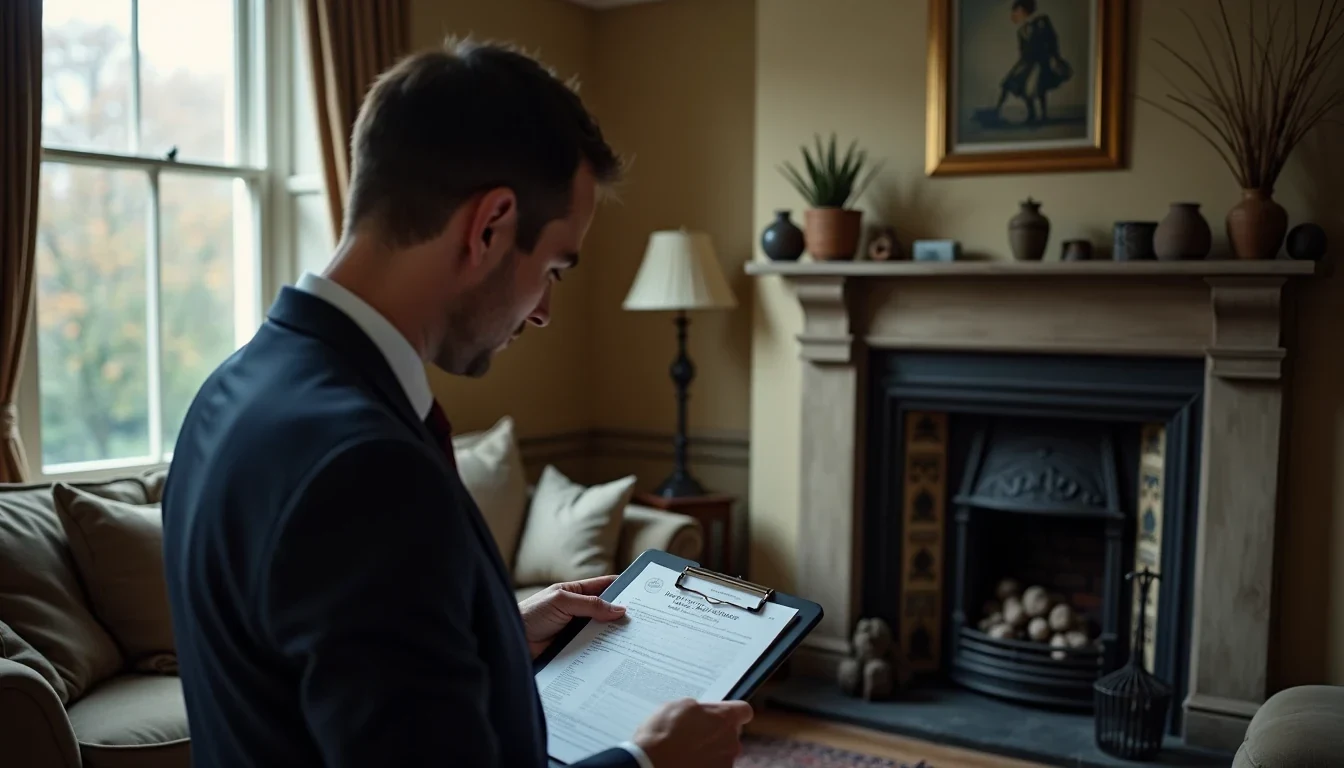
Your chimney could be voiding your home insurance right now, and your insurer will not warn you. Most policies covering solid fuel appliances bury a maintenance clause in the small print, and a single missed sweep is all the excuse they need to reject a fire damage claim. A rejected claim in a Victorian terrace or Edwardian semi does not just hit your wallet. A chimney fire in one house can travel through shared brickwork into next door’s bedroom, and if your policy is invalid, you may be liable for their repairs too.
The risk is real. Millions of British homes still burn wood, coal, or smokeless fuel in original flues built before modern building standards. Lime mortar crumbles, and brickwork becomes porous. A certificate from a guild-registered sweep is the only documentation insurers accept as proof you kept your side of the contract.
Why Shared Chimneys Multiply the Danger
Terraced and semi-detached housing dominates British towns, and these properties often share chimney stacks between two or more homes. The design made sense in the 1890s, but it makes none now.
Degrading lime mortar and aged brickwork create hidden pathways for smoke and carbon monoxide. A fire starting in your flue can breach into a neighbour’s flue cavity. Carbon monoxide, odourless and invisible, can seep through porous walls into adjoining bedrooms. Annual sweeping includes a structural inspection that catches these failures before they become headlines. Without it, you are relying on Victorian craftsmanship to protect twenty-first century lives.
The Insurance Trap Hidden in Plain Sight
Insurers do not ask for your sweep certificate when you pay the premium. They ask for it after the fire, when the loss adjuster arrives. At that point, a missing or outdated certificate becomes grounds for full claim denial.
Guild-certified sweeps issue a Certificate of Chimney Sweeping after each visit. The document records the date, appliance type, fuel used, flue condition, and any recommended repairs. File it with your policy documents. Some insurers now require annual submission; others demand it only after an incident. Without that paper, you are self-insuring against fire damage that can run to tens of thousands of pounds, plus potential liability claims from neighbours whose homes your fire reached through shared masonry.
Building Regulations and the HETAS Sign-Off
Any new solid fuel stove or fireplace installation must comply with Building Regulations Document J. The work requires sign-off from a HETAS-registered installer or direct approval from local building control. That certificate of compliance is conditional; it assumes ongoing maintenance, and regular sweeping is the legal requirement that keeps the installation valid.
Skip the sweep, and you are not merely neglecting maintenance. You are operating an installation outside its certified parameters. This invalidates the original sign-off, breaches building regulations, and exposes you to enforcement action if a fire or CO incident draws official attention. The sweep is the mechanism by which you prove the installation remains safe to operate.
Smoke Control Areas and the Cost of Getting Fuel Wrong
Large urban areas across Britain are designated Smoke Control Areas under the Clean Air Act. In these zones, you may burn only authorised smokeless fuels, or wood and coal in stoves certified as Defra Exempt or meeting EcoDesign standards. Even with the right appliance, burning unseasoned wood or house coal produces heavy soot and illegal dark smoke emissions.
Local councils can fine households up to £1,000 for dark smoke. A neglected chimney accelerates the problem. Soot buildup restricts the flue, causing incomplete combustion and heavier emissions. Regular sweeping maintains airflow and keeps the appliance operating within its certified efficiency band. For EcoDesign stoves, that efficiency is the entire point of the certification. A blocked flue turns a low-emission appliance into a polluter, and you, not the stove, carry the penalty.
The Jackdaw Problem Nobody Sees Coming
British fireplaces sit cold from roughly April to September. Jackdaws notice. These birds build substantial twig nests in chimney pots, often completely blocking the flue by August. The nest is dry, dense, and highly combustible.
Light the first autumn fire without a pre-season sweep, and you may ignite the nest directly. More commonly, the blockage forces toxic gases back into the living space. Carbon monoxide poisoning from blocked chimneys kills annually in Britain. A professional sweep before the heating season clears nests, checks for other wildlife intrusion, and verifies the flue draws properly before you rely on it through the winter.
Finding a Sweep Who Qualifies
Not every trader with brushes and rods can issue the certificate your insurer will accept. Look for membership in one of the three main UK guilds: the National Association of Chimney Sweeps (NACS), the Guild of Master Chimney Sweeps (GoMCS), or the Association of Professional Independent Chimney Sweeps (APICS). Each maintains online directories of certified members.
A proper sweep arrives with rotary power brushes, CCTV inspection capability, and vacuum extraction. They will issue your Certificate of Chimney Sweeping on completion. Some services, including those from Andromeda Chimney, cover the full range of maintenance and inspection work needed to keep historic flues compliant and safe. The certificate they provide is your legal defence if a claim ever arises.
What to Do Before Next Winter
Check your insurance policy for solid fuel maintenance clauses. Most demand annual sweeping; heavy use of wood or house coal may require twice-yearly service. Book a guild-registered sweep for late summer or early autumn, before demand peaks and jackdaw nests harden into place. Store the certificate with your policy documents. If you have installed a new stove since your last policy renewal, confirm your insurer holds the HETAS compliance paperwork and understands the appliance type.
The cost of a sweep runs between £50 and £90 depending on region and appliance complexity. The cost of an invalidated policy, a rejected claim, or a negligence action from a neighbour whose home your fire damaged, runs to figures with more zeros than most mortgages.